
Online slots have turned into a kind of global pastime—some folks spin for a few minutes on their lunch break, others treat it like their weekend ritual. But here’s the thing: whether you’re free to log in and play depends hugely on the country you’re sitting in. Some places practically roll out the red carpet for online gamblers, others turn a blind eye, and a few slam the door shut altogether. It’s a bit of a patchwork quilt, and knowing where online slots are legal can make all the difference between a safe game and a sketchy one.
What Makes Playing Slots Legal in Different Countries?
The legality of online slots isn’t a one-size-fits-all affair. Governments shape their rules based on culture, money, and sometimes good old-fashioned politics. Some countries embrace it like any other entertainment industry. Others act like online gambling is the cousin they don’t want showing up at family dinners.
Take the United Kingdom, for instance. The UK Gambling Commission (UKGC) takes its role so seriously that if an operator so much as sneezes out of line, they’re slapped with fines that can run into millions. I once heard a friend joke that British slot players almost have too much protection—every deposit, every spin feels like it’s wrapped in bubble wrap. Then you have Singapore, where things are so tightly locked down that only a handful of government-approved operators can operate at all. Worlds apart, yet both justified in their own ways.
Understanding Online Gambling Regulation
When regulators put rules in place, they’re usually thinking about three main things:
first, making sure the games are fair; second, ensuring governments collect taxes; and third, protecting people from going too far down the rabbit hole. A decent regulator will demand proof that slot games run on certified Random Number Generators (RNGs), that the operator actually pays out winnings, and that players’ money is kept safe.
It sounds dry when you write it out like that, but it’s the kind of stuff that makes or breaks your night. I once signed up on an unlicensed site in my early days—looked legit, flashy banners, even had a “Vegas feel.” A week later, my withdrawal “got lost in processing.” Lesson learned.
Licensing Bodies and Jurisdiction by Country
Some names pop up again and again in the licensing world. Malta Gaming Authority (MGA) is probably the superstar of Europe. If a casino has an MGA license, most players breathe a little easier. Gibraltar and the Isle of Man also have strong reputations, though a bit less mainstream.
Outside Europe, you’ve got the Philippines through PAGCOR, which mostly licenses operators serving foreign markets. Colombia, funnily enough, was the first South American country to step forward and say, “Yep, we’ll regulate online casinos.” For a while, players there were pretty much the guinea pigs of Latin America’s regulated iGaming experiment.
Top Countries for Legal Online Slots
Europe’s Regulated iGaming Markets
Europe has practically set the gold standard for online gambling regulation. The UK, of course, is the poster child. Deposit limits, self-exclusion tools, advertisements policed like they were political ads—you name it, they regulate it.
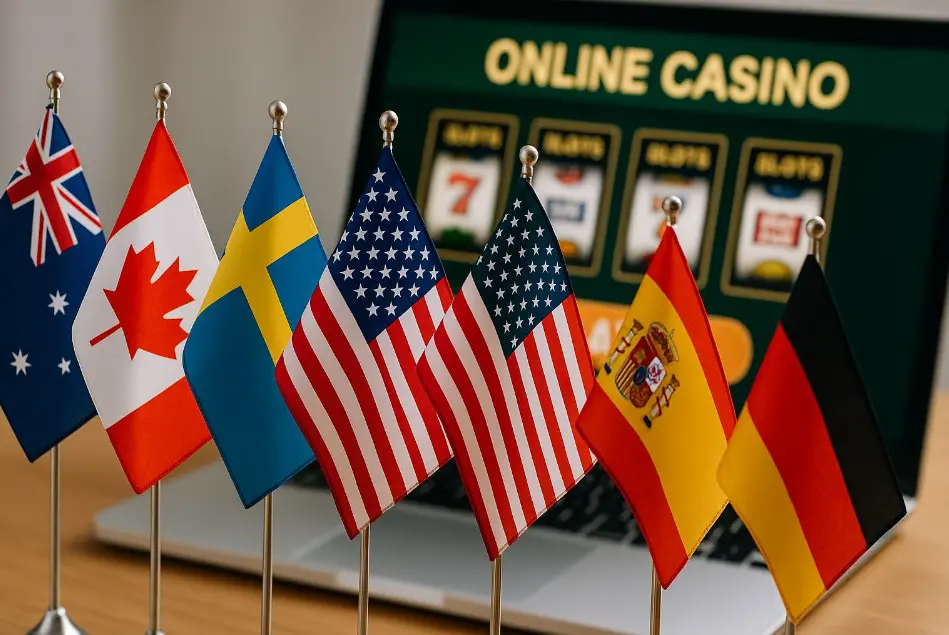
Sweden takes it even further. They once limited bonuses so strictly that Swedish players were joking about getting a “cup of coffee” as their welcome gift. Spain keeps things lively with its local licensing, while Germany insists on slower spin speeds to curb compulsive play. Italy, Denmark, and the Netherlands all run thriving but carefully supervised markets.
One of my pals who moved to Stockholm complained at first about Sweden’s “stingy” bonuses. But after a few months, he admitted it gave him more control over his bankroll. Sometimes the rules feel stiff, but the payoff is peace of mind.
North American Slot Legislation
North America’s situation is a bit like a patchwork quilt stitched by five different seamstresses. In the United States, it’s all about state laws. New Jersey was the first out of the gate, and if you’ve ever played there, you’ll know it’s like the Vegas of online slots—tons of variety, and everything licensed down to the last spin. Michigan, Pennsylvania, and West Virginia have joined the fold too. But step across into a non-regulated state, and suddenly your favorite app just won’t load. It can feel like having Netflix switch off because you crossed the street.
Canada is its own mixed bag. Ontario launched a regulated iGaming market with dozens of licensed operators, and they’ve done a pretty slick job. Elsewhere, it’s provincial government platforms, like British Columbia’s PlayNow. And then there’s Mexico, where regulation exists but enforcement is hit-or-miss, leading to a bit of a wild west vibe.
Asia-Pacific Legal Landscape
Australia is one of those puzzling cases. Officially, online casinos are banned. But practically, loads of Aussies still play on offshore sites. It’s like the country says, “No slots allowed,” while players just wink and carry on. New Zealand’s rules are clearer: residents can’t play on domestic sites (other than state lotteries), but logging into overseas platforms is fair game.
The Philippines is interesting too. PAGCOR licenses casinos for international players but limits what locals can access. Meanwhile, China keeps everything under a firm ban. You won’t find a licensed slot platform there, at least not legally.
Latin & South American Online Gambling
South America is moving fast in the iGaming world. Colombia set the tone back in 2016, and today it’s seen as a success story in the region. Argentina has decentralized regulation, so some provinces have their own rules—Buenos Aires being the most active. Brazil is on the cusp of something big, with new laws opening the doors to legal online betting, and potentially, slots. Mexico, as mentioned, sits somewhere between controlled and chaotic.
A Colombian player once told me how reassuring it was when he switched from an offshore site to a regulated local one. He finally got customer support in Spanish that actually responded, and payouts arrived without the usual song and dance.
Comparing Regulatory Environments and Player Protection
Not every regulated market feels the same once you’re inside it. Some lean heavily toward protecting the player, others focus more on taxes and let operators do their thing. Sweden’s strict deposit and bonus limits annoy some players but help prevent addiction. The UK’s affordability checks can feel invasive, but they’re meant to keep gambling sustainable. On the flip side, places like Mexico and the Philippines have lighter restrictions, which can be great for flexibility but leave players with fewer safety nets.
Consumer Safety and Fairness Standards Worldwide
Most player protections fall into three buckets: fairness, security, and responsible gambling. European regulators require games to be certified by independent testers like eCOGRA. U.S. states use geolocation to keep outsiders from sneaking in. Colombia enforces anti-money laundering checks.
When I lived briefly in Ontario, I was impressed by how transparent everything was. Even the slot RTP percentages were published on official sites. It takes some of the mystery out of spinning and reassures you that you’re not being fleeced.
How to Identify Licensed Casino Platforms
If you’re ever unsure whether an online casino is legit, scroll to the bottom of their site. Reputable platforms proudly display their licensing authority. A sketchy operator, on the other hand, will either hide that info in fine print or skip it entirely.
Here’s a quick, no-fuss checklist I keep in mind when sizing up a new site:
- Check the license and see if it links to the regulator’s database.
- Look for independent audits—eCOGRA is the name that pops up most.
- Scan for secure payment methods (PayPal, Visa, etc.) and proper SSL locks.
- See if there’s live chat support that actually responds.
- Test the responsible gambling tools. If they don’t exist, that’s a red flag.
It only takes a few minutes, but those minutes can save you from losing not just your bankroll but your peace of mind.
FAQs: Global Slot Legality and Jurisdictions
Are online slots legal everywhere?
Nope. Each country makes its own call. Some roll with it, others ban it outright.
Which countries are considered the safest for online slots?
The UK, Sweden, Spain, and U.S. states like New Jersey stand out. You’re covered by strict laws and real consumer protection.
Can I play on offshore casinos if my country bans online gambling?
Technically, yes. But the risks—like frozen withdrawals and zero recourse—are very real.
What licenses should I look for when choosing a casino?
Top names include the UKGC, MGA, Gibraltar, and the major U.S. state gaming boards.
Is playing slots abroad different from at home?
Definitely. Your legal access changes with geography. I’ve had friends shocked when their favorite app just stopped working on holiday.